How Behavioral Therapy Rewires the Brain for Addiction Recovery
Addiction can feel like an impossible maze, a labyrinth of cravings and compulsions where every turn leads back to the same place. It’s a powerful force, one that can hijack your thoughts, dictate your actions, and strain your most cherished relationships. But what if you had a map? What if you could learn the skills to navigate that maze, to find new paths, and to ultimately walk out into the light? This is the core promise of behavioral therapy for substance abuse, a collection of powerful, evidence-based strategies designed to help you understand your own mind and reclaim control over your life.
This journey isn’t about willpower alone, it’s about skillpower. It’s about understanding the deep-seated patterns that fuel addiction and systematically replacing them with healthier, more rewarding alternatives. It’s a process of learning, unlearning, and relearning, guided by a professional who can provide the tools, support, and insight needed to make lasting change not just a possibility, but a reality.

What Is Behavioral Therapy for Addiction?
Behavioral therapy for addiction is a structured form of psychotherapy that helps individuals identify and change the destructive thought patterns and behaviors contributing to their substance use. It operates on the principle that behaviors, including addiction, are learned and can therefore be unlearned or replaced with healthier coping mechanisms.
Instead of focusing primarily on the past or unconscious motivations, this approach is active and present-focused. It equips you with practical, real-world skills to manage cravings, avoid high-risk situations, and solve the problems that might otherwise lead you to use substances. Think of it as a form of mental and emotional training for the challenges of recovery. It’s a collaborative effort between you and a therapist to build a new foundation for a life free from addiction.

Why Is Changing Behavior So Crucial in Recovery?
Changing behavior is crucial in recovery because addiction is fundamentally a behavioral disorder, rooted in a cycle of powerful, learned habits. The brain’s reward system, designed to encourage life-sustaining activities like eating and socializing, gets hijacked by substances, creating an intense, compulsive drive to seek and use them despite devastating consequences.
This process forges deep neurological pathways. Triggers, which can be people, places, emotions, or even times of day, become automatically linked to the act of using. Over time, this response becomes so ingrained that it feels less like a choice and more like a reflex. Simply stopping the substance without addressing these underlying behavioral patterns is like pulling a weed but leaving the roots, the problem is almost certain to grow back.
Effective recovery requires dismantling this entire structure. It involves learning to recognize your personal triggers and developing strategies to manage them without resorting to substance use. It’s about creating new, healthy routines that provide fulfillment and purpose, effectively building a life where sobriety is more rewarding than addiction. Behavioral therapy provides the blueprint and the tools to accomplish this profound transformation.

What Are the Main Types of Behavioral Therapy?
There are several highly effective, evidence-based types of behavioral therapy, each with a unique focus and set of techniques to address the complexities of substance abuse. While they share the common goal of changing behavior, they approach it from different angles, allowing treatment to be tailored to an individual’s specific needs, challenges, and co-occurring conditions.
The most prominent and well-researched forms include Cognitive Behavioral Therapy (CBT), Dialectical Behavior Therapy (DBT), Contingency Management (CM), and Motivational Interviewing (MI). Each of these modalities offers a distinct toolkit for understanding triggers, managing emotions, building motivation, and developing the skills necessary for long-term recovery. A skilled therapist will often integrate elements from different approaches to create the most effective treatment plan for you.

How Does Cognitive Behavioral Therapy (CBT) Work?
Cognitive Behavioral Therapy, or CBT, works by helping you identify, challenge, and change the unhelpful thinking patterns and beliefs that fuel your substance use. The core idea behind CBT is that our thoughts, feelings, and behaviors are interconnected, and by changing our thoughts, we can change how we feel and what we do.
In CBT sessions, a therapist helps you become a detective of your own mind. You learn to spot the automatic negative thoughts that often precede a craving or a decision to use. For instance, a thought like "I can’t handle this stress without a drink" is identified not as a fact, but as a learned, unhelpful belief. The next step is to examine the evidence for and against this thought, challenging its validity.
Finally, you work on replacing it with a more balanced and realistic thought, such as "This is stressful, but I have other ways to cope, like calling a friend or going for a run." This process, known as cognitive restructuring, is a central skill taught in CBT. By repeatedly practicing this, you weaken the old, destructive thought-behavior pathways and build new, healthier ones, giving you greater control over your responses to triggers and stress.

CBT also has a strong behavioral component. You will learn practical skills for managing cravings, refusing substances in social situations, and solving problems constructively. You might create a schedule for your day to build a positive routine or practice relaxation techniques to manage anxiety. It’s a very hands-on, goal-oriented therapy that equips you with a tangible toolkit for navigating the challenges of daily life in recovery.

What is Dialectical Behavior Therapy (DBT)?
Dialectical Behavior Therapy, or DBT, is a specialized form of CBT that works by teaching skills to help people manage intense emotions and improve their relationships. While originally developed for borderline personality disorder, its effectiveness in treating substance abuse, especially when co-occurring with emotional dysregulation, is well-established.
The "dialectical" part of the name refers to the core concept of balancing two seemingly opposite ideas at once: acceptance and change. DBT helps you accept yourself and your current situation without judgment, while simultaneously working to change your destructive behaviors and build a better life. This balance is crucial, as it reduces the shame and self-criticism that can often derail recovery efforts.
DBT is structured around four key modules of skills. The first is Mindfulness, which teaches you to be fully aware and present in the current moment without getting swept away by intense thoughts or emotions. It’s about observing your inner state with curiosity rather than reacting impulsively. This skill is foundational for managing cravings and making conscious choices.
The second module is Distress Tolerance, which provides concrete strategies for surviving crisis situations without making them worse through substance use. You learn techniques to get through overwhelming moments, accepting reality as it is and finding ways to cope that don’t involve turning to drugs or alcohol. The third, Emotion Regulation, helps you understand your emotions, reduce your vulnerability to negative feelings, and increase positive emotional experiences. You learn to identify what you’re feeling and change your emotional response when you want to.
Finally, the fourth module is Interpersonal Effectiveness. This set of skills teaches you how to be assertive, set boundaries, and navigate conflict in your relationships in a healthy way. Since relationship problems are often a major trigger for substance use, learning to communicate your needs effectively and maintain supportive connections is a vital part of a stable recovery.

How Does Contingency Management (CM) Reinforce Sobriety?
Contingency Management, or CM, reinforces sobriety by providing tangible, positive rewards for objective proof of abstinence, such as a clean urine test. This approach is based on a simple yet powerful principle of behavioral psychology: behavior that is consistently rewarded is more likely to be repeated.
In a CM program, you and your therapist agree on specific target behaviors, most commonly attending therapy sessions and remaining abstinent from substances. Each time you successfully meet one of these goals, you receive an immediate reward. These rewards are often modest but meaningful, such as vouchers for groceries, cinema tickets, or other goods and services that promote a healthy lifestyle.
The power of CM lies in its ability to provide an immediate, tangible counterweight to the immediate reward of substance use. The brain of someone with an addiction is wired to prioritize short-term gratification. CM directly competes with this by offering a positive, healthy, and immediate alternative. This consistent positive reinforcement helps to slowly retrain the brain’s reward circuits, making sober activities feel more appealing and worthwhile.
Some programs use a system where the value of the reward increases with each consecutive clean test, creating a strong incentive to maintain sobriety over time. While it may sound overly simplistic, research has shown CM to be one of the most effective methods for initiating and maintaining abstinence, particularly in the early stages of recovery. It is often used in combination with other therapies like CBT to build both motivation and coping skills simultaneously.

What Is the Community Reinforcement Approach (CRA)?
The Community Reinforcement Approach, or CRA, is a comprehensive behavioral program that works by reorganizing your life so that a sober lifestyle becomes more rewarding and fulfilling than a life of substance use. It operates on the understanding that your environment, including your family, social network, and recreational activities, plays a massive role in maintaining addiction or supporting recovery.
CRA is a highly practical and wide-ranging therapy. A therapist works with you to analyze all the different areas of your life and identify what needs to change. This can include job counseling to help you find stable and meaningful employment, which provides structure, income, and self-esteem. It also involves building new social and recreational habits. You might explore new hobbies or join clubs that don’t revolve around substance use, helping you find joy and connection in sober activities.

A key component of CRA is improving relationships. For those with partners or families, therapy often includes couples or family counseling to improve communication and rebuild trust. The goal is to make your home life a source of support and happiness, rather than stress and conflict that might trigger a desire to use. You also learn specific skills, such as how to refuse substances politely but firmly and how to cope with cravings.
A variation of this approach, known as Community Reinforcement and Family Training (CRAFT), is designed specifically for the family members of someone who is resistant to entering treatment. CRAFT teaches families effective, non-confrontational strategies to encourage their loved one to seek help, while also helping the family members reduce their own stress and improve their quality of life, regardless of whether their loved one chooses recovery.

How Does Motivational Interviewing (MI) Build Commitment?
Motivational Interviewing, or MI, builds commitment to change by helping you explore and resolve your own ambivalence about quitting substance use. It is a collaborative, person-centered counseling style that avoids confrontation and instead focuses on strengthening your personal motivation and commitment to a specific goal.
The therapist acts as a supportive partner rather than an expert dictating what you should do. They understand that feeling uncertain or having mixed feelings about changing a major life habit is completely normal. The entire conversation is guided by a spirit of partnership, acceptance, and compassion. The therapist listens more than they talk, using open-ended questions, affirmations, and reflections to help you articulate your own reasons for change.
Through this guided conversation, you begin to explore the gap between your current behavior and your deeper values and goals. For example, a therapist might ask, "On one hand, drinking helps you relax after a tough day. On the other hand, what are some of the things you value in life that drinking might be getting in the way of?" This helps you voice the negative consequences of your substance use yourself, which is far more powerful than having someone else point them out.
MI is not about tricking or pressuring you into changing. It’s about empowering you to find your own motivation from within. By resolving your internal conflict and building your confidence that you can change, MI helps you move from a state of contemplation to one of action. It is often used in the early stages of treatment to prepare you for the more intensive work of other therapies like CBT or DBT.

What Can You Expect During a Therapy Session?
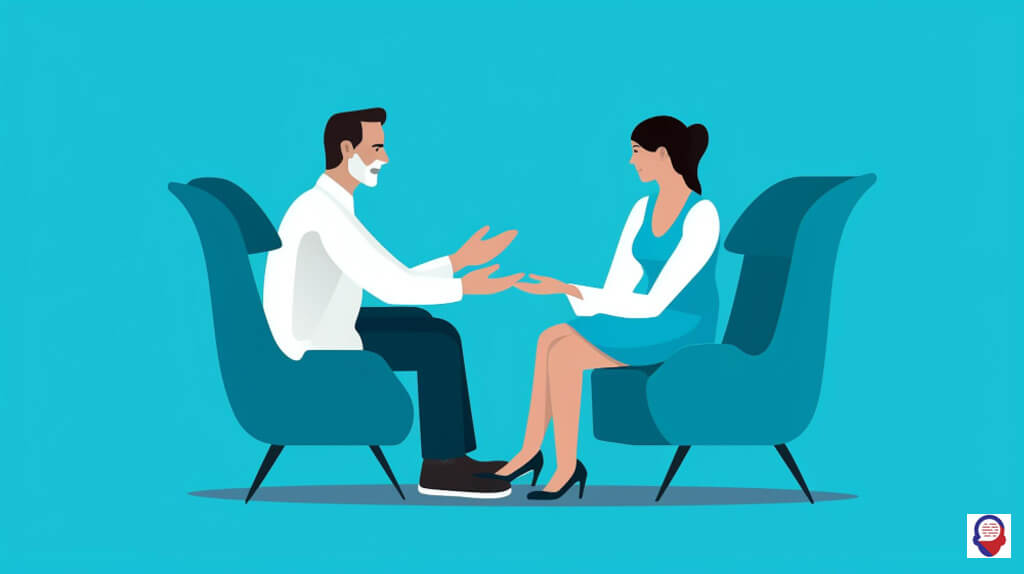
You can expect a therapy session to be a confidential, collaborative, and goal-oriented conversation focused on your recovery. It is a safe space where you can speak openly and honestly about your struggles without fear of judgment.
The first few sessions are typically dedicated to assessment. Your therapist will ask questions about your history of substance use, your mental and physical health, your family life, and your personal goals. This helps them understand the full picture of your situation and work with you to develop a personalized treatment plan. This is a two-way street, it’s also your chance to see if the therapist is a good fit for you.
As therapy progresses, sessions will become more focused on skill-building. Depending on the type of therapy, you might spend time identifying your personal triggers, practicing new ways to respond to stressful thoughts, or role-playing how to handle a difficult social situation. Your therapist will teach you concrete techniques and strategies that you can apply in your daily life.
You will likely be given "homework" assignments between sessions. This isn’t like schoolwork, but rather an opportunity to practice your new skills in the real world. This could be as simple as keeping a thought journal, trying a new relaxation technique, or attending a support group meeting. The work you do outside of the therapy room is just as important as the work you do inside it, as this is where real, lasting change happens.

How Do You Find the Right Therapist and Approach?
Finding the right therapist and approach involves looking for a qualified professional with expertise in addiction and ensuring you feel a strong, comfortable connection with them. This therapeutic relationship is one of the most significant predictors of successful treatment outcomes.
Start by looking for credentials. A qualified therapist should be licensed in their field, such as a licensed professional counselor (LPC), a licensed clinical social worker (LCSW), a psychologist (PhD or PsyD), or a psychiatrist (MD). Crucially, you should look for someone who explicitly states that they specialize in substance use disorders or addiction. This ensures they have the specific training and experience necessary to help you effectively.

Once you have a list of potential therapists, don’t be afraid to ask questions before committing. You might ask about their therapeutic approach, what a typical session looks like, and their experience treating issues similar to yours. Most therapists offer a brief initial consultation, often for free, which is the perfect opportunity to gauge your comfort level.
Pay close attention to how you feel during this initial interaction. Do you feel heard and respected? Does the therapist seem empathetic and non-judgmental? This personal connection, often called the "therapeutic alliance," is vital. You need to feel safe and comfortable enough to be vulnerable, so trust your gut. The "best" therapist on paper isn’t the best for you if you don’t feel a sense of trust and rapport.

Is Behavioral Therapy a Standalone Treatment?
Behavioral therapy is rarely a standalone treatment, but rather a central and essential component of a comprehensive recovery plan. While it is incredibly powerful for changing the thoughts and behaviors that drive addiction, the most effective treatment often integrates it with other forms of support.
For many people, recovery also involves medical care. This can include a medically supervised detoxification to manage withdrawal symptoms safely, as well as medication-assisted treatment (MAT). Certain medications can help reduce cravings or block the rewarding effects of substances, providing a level of stability that makes it easier to engage in and benefit from behavioral therapy.
Peer support is another critical element. Programs like Alcoholics Anonymous (AA), Narcotics Anonymous (NA), or other secular support groups like SMART Recovery provide a community of people with shared experiences. This sense of fellowship can reduce feelings of isolation, provide practical advice, and offer hope and encouragement, complementing the skills learned in individual therapy.
A holistic approach that addresses the biological, psychological, and social aspects of addiction offers the highest chance of success. Behavioral therapy provides the psychological tools, medication can address the biological components, and support groups handle the social dimension. Together, they create a robust support system that addresses the whole person, not just the addiction.
Frequently Asked Questions

How long does behavioral therapy for addiction take? The duration of behavioral therapy for addiction varies greatly from person to person, as it depends on factors like the severity of the substance use disorder, the presence of co-occurring mental health conditions, and the individual’s progress. Some focused, short-term approaches might last for 12 to 16 weeks, while others may require ongoing therapy for a year or more as part of a long-term recovery maintenance plan.
Can behavioral therapy work for all types of substance abuse? Yes, behavioral therapy is a versatile and effective treatment for a wide range of substance use disorders, including addiction to alcohol, opioids, stimulants, cannabis, and nicotine. The core principles of identifying triggers, managing cravings, and changing thought patterns are applicable across different substances. However, the specific therapeutic approach may be tailored, for instance, Contingency Management is often highly effective for stimulant use, while DBT can be crucial for those with co-occurring emotional issues.

Is online behavioral therapy as effective as in-person? A growing body of research suggests that online behavioral therapy, or teletherapy, can be just as effective as traditional in-person therapy for many individuals with substance use disorders. It offers significant benefits in terms of accessibility, convenience, and privacy, removing barriers like transportation and scheduling conflicts. The key to its effectiveness remains the same as in-person therapy: the quality of the therapeutic alliance and your active engagement in the process.

What if I relapse while in therapy? Relapse is a common part of the recovery process for many people and is not considered a failure. If you relapse while in therapy, it is crucial to be honest with your therapist about it. A good therapist will approach the situation without judgment, viewing it as a learning opportunity to identify what went wrong, strengthen your coping skills, and adjust your treatment plan accordingly. Relapse can provide valuable information about triggers and vulnerabilities that still need to be addressed.
At Counselling-uk, we understand that asking for help is one of the bravest steps you can take. Addiction can make you feel isolated, but you are not alone, and recovery is possible. We provide a safe, confidential, and professional place where you can find expert advice and compassionate support for all of life’s challenges. If you are ready to start rewriting your story and building a new life, we are here to provide the map and walk alongside you on your journey. Reach out today to connect with a qualified professional and take the first step towards reclaiming your future.