
How Cognitive Behavioral Therapy Can Heal PTSD
Living with the aftershocks of trauma can feel like being trapped in a storm you can’t escape. The past isn’t just a memory, it’s a constant, visceral presence that hijacks your sense of safety and steals your peace. You might feel isolated, misunderstood, and exhausted by the daily battle inside your own mind. But there is a path through the storm, a well-trodden, evidence-backed road to recovery. That path is Cognitive Behavioral Therapy, or CBT, a powerful approach that has helped countless individuals reclaim their lives from Post-Traumatic Stress Disorder (PTSD).
This article is your guide. It’s here to demystify CBT, to pull back the curtain on how it works, and to show you that healing is not just a distant hope, but an achievable reality. We will explore the mechanics of trauma, the logic of CBT, and the practical steps you can take to move from merely surviving to truly thriving. You are not broken, and you are not alone. Your journey toward a calmer, brighter future can start right here.

What Is Post-Traumatic Stress Disorder (PTSD)?
Post-Traumatic Stress Disorder is a mental health condition that can develop after experiencing or witnessing a terrifying, life-threatening, or deeply distressing event. It’s your mind and body’s attempt to cope with an overwhelming experience, but the coping mechanisms have become stuck, keeping you in a state of high alert long after the danger has passed.
Think of it as a mental injury, not a sign of weakness. When you break a bone, it heals, but sometimes it heals incorrectly without proper treatment. PTSD is similar, the brain’s natural healing process has been disrupted, and the memories of the event remain raw and unprocessed, causing ongoing distress. It’s a normal, human reaction to an abnormal, inhuman situation.

What are the core symptoms of PTSD?
The core symptoms of PTSD fall into four main categories: re-experiencing, avoidance, negative changes in thoughts and mood, and changes in physical and emotional reactions. These clusters of symptoms work together to create the challenging landscape of post-traumatic stress.
Re-experiencing means the trauma intrudes into your present life, uninvited. This can manifest as vivid, distressing flashbacks that feel like you are reliving the event, recurring nightmares, or intense emotional or physical reactions when reminded of the trauma. It’s as if the past refuses to stay in the past.
Avoidance is a natural attempt to protect yourself from this pain. You might go to great lengths to avoid people, places, conversations, or activities that remind you of the traumatic event. You may also try to avoid thinking or feeling anything related to it, sometimes leading to emotional numbness.
Negative changes in thoughts and mood create a persistent, pessimistic filter over your world. This can include ongoing feelings of fear, anger, guilt, or shame. You might lose interest in activities you once enjoyed, feel detached from others, or hold strong negative beliefs about yourself or the world, such as “I am bad” or “No one can be trusted.”
Finally, changes in physical and emotional reactions, often called hyperarousal, leave you feeling constantly on edge. This can look like being easily startled, always being on the lookout for danger, having trouble sleeping, or experiencing angry outbursts. Your body’s alarm system is stuck in the “on” position, leaving you perpetually tense and exhausted.
Why does trauma get “stuck”?
Trauma gets “stuck” because it fundamentally overwhelms and disrupts the brain’s natural memory processing system. Normally, your brain takes experiences, files them away with a beginning, middle, and end, and integrates them into your life story. You can recall the memory, but it feels like it belongs in the past.
A traumatic event shatters this process. The sheer terror and helplessness trigger a primal survival response, fight, flight, or freeze. During this state, your prefrontal cortex, the “thinking” part of your brain, goes offline, and your amygdala, the brain’s “smoke detector,” takes over completely.
Because the thinking brain isn’t fully engaged, the memory isn’t encoded properly. It’s stored in fragmented pieces, full of sensory details, emotions, and physical sensations, but without context or a timeline. These fragments are not filed away as a completed story, instead, they remain active and easily triggered, making it feel as if the trauma is happening again and again in the present moment.

What Is Cognitive Behavioral Therapy (CBT)?

Cognitive Behavioral Therapy is a highly effective and widely researched form of psychological treatment, a type of talk therapy that helps you become aware of and change unhelpful thinking patterns and behaviors. It operates on a simple, yet profound, principle: your thoughts, feelings, and actions are all interconnected, and they powerfully influence one another.
CBT is a practical, goal-oriented approach. It doesn’t dwell endlessly on your childhood to find the roots of your problems. Instead, it focuses on the “here and now,” equipping you with concrete skills to tackle the challenges you are facing today. It’s less about asking “why” you feel a certain way and more about understanding “how” your thoughts are creating those feelings and what you can “do” to change them.
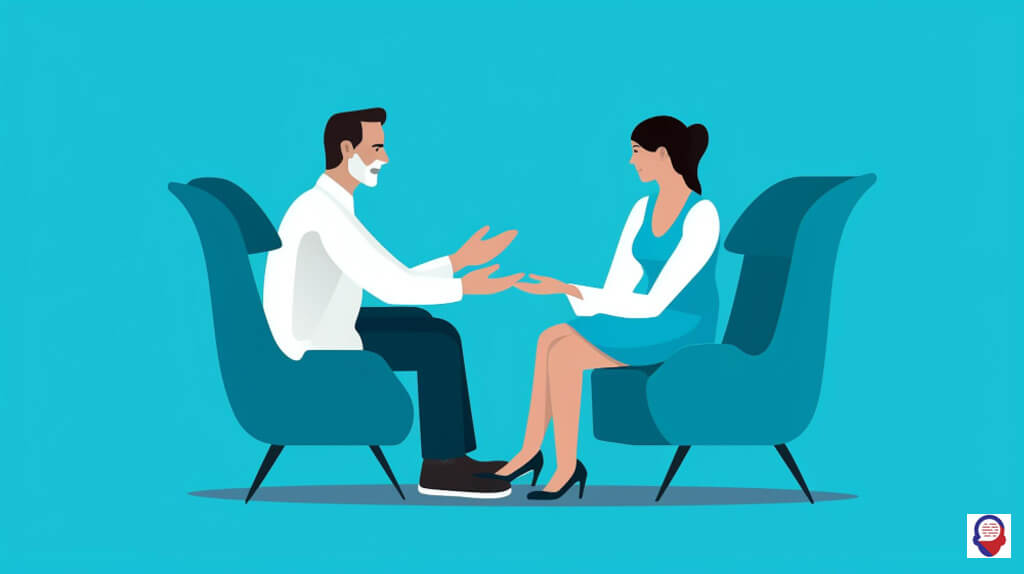
This therapy is a collaborative partnership. You and your therapist work together as a team to identify the specific thought and behavior cycles that are keeping you stuck. The goal is to empower you to become your own therapist, armed with a toolkit of strategies to navigate life’s difficulties long after your sessions have ended.

How does CBT work in general?
CBT works by breaking down overwhelming problems into smaller, more manageable parts. These parts are typically your thoughts, known as cognitions, your emotions or feelings, your physical sensations, and your actions or behaviors.
By examining these components separately, you can begin to see the connections between them. For example, you might have a negative thought (“I’m going to fail this presentation”), which leads to a feeling of anxiety, which causes physical sensations like a racing heart and sweaty palms, which then prompts a behavior, like avoiding the presentation altogether.
A CBT therapist helps you to identify these cycles. Once a cycle is identified, you can begin to intervene at different points. The primary focus is often on challenging the negative thought, the “cognition,” that sets the whole chain reaction in motion. By learning to question its validity and replace it with a more balanced and realistic thought, you can change how you feel and, consequently, how you act. It’s about learning to step back and assess your thoughts, rather than accepting them as absolute truths.

How Does CBT Specifically Treat PTSD?
CBT for PTSD, often referred to as Trauma-Focused CBT (TF-CBT), directly addresses the traumatic memory and the distorted beliefs that have grown around it like weeds. It doesn’t just manage the symptoms, it gets to the root of the problem by helping your brain properly process and file away the traumatic experience.
This specialized form of therapy uses a combination of techniques to achieve this. It helps you understand your trauma reaction, teaches you skills to manage overwhelming emotions, guides you in confronting what you’ve been avoiding in a safe way, and helps you rewrite the unhelpful narrative you’ve developed about yourself and the world since the event. It’s a structured, multi-component treatment designed to systematically dismantle the structure of PTSD.
The ultimate goal is to reduce the emotional charge of the trauma memory. The memory itself won’t disappear, but it will no longer have the power to control your life. It will become just that, a memory of something that happened in the past, rather than a constant threat in the present.

What is psychoeducation?
Psychoeducation is the foundational first step in TF-CBT where you learn about trauma and its common effects on the human brain, mind, and body. It’s an educational process that provides you with a clear and accurate framework for understanding what you are experiencing.
This is a profoundly empowering component of therapy. Many people with PTSD feel like they are “going crazy” or that there is something fundamentally wrong with them. Psychoeducation dismantles this fear and self-blame by normalizing your reactions.
Learning that hypervigilance is a result of an overactive amygdala, or that emotional numbness is a protective coping mechanism, can bring an immense sense of relief. It reframes your symptoms not as personal failings, but as predictable, understandable consequences of an overwhelming event. This knowledge reduces confusion and shame, creating a solid base of understanding from which the deeper therapeutic work can begin.

What are coping and relaxation skills?

Coping and relaxation skills are practical, hands-on techniques taught early in therapy to help you manage the intense anxiety and emotional distress that are hallmarks of PTSD. These skills are your toolkit for regulating your nervous system when you feel overwhelmed.
Before you can safely approach the difficult work of processing trauma, you need to have ways to ground yourself and feel safe in your own body. Your therapist will guide you through various exercises, which can include diaphragmatic breathing, or deep belly breathing, which activates the body’s relaxation response. They may also teach you progressive muscle relaxation, where you systematically tense and release different muscle groups to relieve physical tension.
Grounding techniques are another crucial skill. These are simple methods to pull your attention back to the present moment when you feel yourself drifting into a flashback or a spiral of anxiety. This could involve focusing on the feeling of your feet on the floor, naming five things you can see in the room, or holding a piece of ice. These skills give you a sense of control and are essential for navigating the therapeutic process safely.

What is cognitive processing?
Cognitive processing is the “cognitive” heart of Cognitive Behavioral Therapy, where you learn to identify, challenge, and change the negative thoughts and beliefs that were born from the trauma. This part of the therapy directly targets the distorted conclusions your mind drew in the wake of the event.
Following a trauma, it’s common to develop deeply ingrained, unhelpful beliefs known as “stuck points.” These are thoughts like, “The world is a completely dangerous place,” “I can’t trust anyone,” “It was my fault,” or “I am permanently damaged.” These beliefs shape your emotions and drive your behaviors, keeping you trapped in a cycle of fear and avoidance.
In therapy, you and your therapist will work together to put these thoughts on trial. You’ll learn to act like a detective, examining the evidence for and against your stuck points. You’ll ask questions like, “What’s the proof for this thought?” and “Is there another way of looking at this situation?” The goal is not to engage in blind positive thinking, but to develop a more balanced, realistic, and compassionate perspective that aligns with your present-day reality, not the reality of the traumatic moment.

What is exposure therapy?
Exposure therapy is a carefully guided and supportive process where you gradually and safely confront the trauma-related memories, feelings, and situations that you have been avoiding. It is based on the principle that avoidance, while it feels protective in the short term, is what actually maintains the fear and power of PTSD in the long term.
This process is always done collaboratively and at a pace that feels manageable for you. There are two primary forms. The first is imaginal exposure, where, in the safety of the therapy room, you recount the traumatic memory out loud, in detail, several times. This helps your brain learn that talking and thinking about the memory, while distressing, is not dangerous. It allows the memory to be processed and filed away correctly.
The second form is in vivo exposure, which means “in real life.” You and your therapist will create a list of situations or places you avoid because they remind you of the trauma, ranked from least to most scary. You then gradually begin to confront these situations, starting with the easiest ones, until your fear subsides. This process, known as habituation, retrains your brain to understand that these once-feared triggers are now safe.

What Can You Expect From a CBT Session for PTSD?
You can expect a structured, collaborative session focused on specific, agreed-upon goals, where you and your therapist work together as an active team. Unlike some forms of therapy that are more open-ended, CBT sessions have a clear agenda and are designed to be productive and skill-focused.
The atmosphere is one of partnership and transparency. Your therapist will be your guide, teaching you the tools and techniques, but you are the expert on your own experience. The sessions are a safe space to practice new ways of thinking and behaving, with the therapist providing support, feedback, and encouragement along the way. It’s an active, engaging process aimed at creating tangible change in your daily life.

What happens in the first few sessions?
The first few sessions are primarily about building a foundation of trust and safety, conducting a thorough assessment, and establishing your therapeutic goals. Your therapist’s first priority is to create a strong therapeutic relationship where you feel heard, respected, and understood.

During this initial phase, your therapist will ask you questions about your history, the nature of your trauma, and the specific symptoms you are experiencing. This assessment is crucial for tailoring the treatment plan to your unique needs. You will also work together to set clear, achievable goals for what you want to get out of therapy.
This is also when psychoeducation begins. Your therapist will explain the CBT model for PTSD, helping you understand how the therapy works and what to expect from the process. These early sessions are all about setting the stage for the deeper work to come, ensuring you feel safe, informed, and prepared.

What does a typical session look like?
A typical CBT session is quite structured and follows a predictable pattern. It usually begins with a brief check-in, where you’ll discuss your week, your mood, and any progress or challenges you had with your between-session practice.
Next, you and your therapist will collaboratively set an agenda for the session. This ensures the time is used effectively to address your most pressing concerns and work towards your goals. You are an active participant in deciding what to focus on.
The main part of the session is dedicated to the therapeutic work itself. This could involve learning a new relaxation skill, practicing cognitive processing to challenge a stuck point, or engaging in exposure work. The therapist acts as a coach, guiding you through the exercises. The final part of the session involves a summary of what was covered and agreeing on a ‘homework’ or ‘action plan’ task to practice before your next meeting.

Is there homework involved?
Yes, CBT for PTSD almost always involves tasks or practices to complete between sessions, often called an action plan or homework. This is a critical component of the therapy, as the real change happens when you apply the skills you learn in session to your everyday life.
This isn’t like school homework designed to be graded. It’s a practical application of your learning. Your therapist might ask you to practice a breathing exercise every day, to keep a thought record to identify your stuck points as they happen, or to take a small step in facing a mildly avoided situation.
These tasks help to reinforce what you’ve learned, build your confidence, and accelerate your progress. They bridge the gap between the therapy room and the real world, empowering you to actively participate in your own recovery journey. The work you do between sessions is often just as important as the work you do during them.

Is CBT for PTSD Effective?
Yes, Cognitive Behavioral Therapy, particularly Trauma-Focused CBT, is widely recognized by scientific research and major health organizations as one of the most effective treatments for PTSD. Decades of rigorous studies have demonstrated its ability to produce significant and lasting reductions in PTSD symptoms.
It is considered a ‘gold standard’ treatment because of the robust body of evidence supporting its efficacy across different types of trauma and diverse populations. For many people, completing a course of TF-CBT leads not just to symptom reduction, but to a full recovery, allowing them to move forward with their lives with a renewed sense of safety and well-being.

How long does treatment usually take?
The duration of treatment can vary depending on individual factors, but a standard course of Trauma-Focused CBT for PTSD typically lasts between 12 and 20 weekly sessions. Each session usually lasts from 60 to 90 minutes.
The exact length of your therapy will depend on factors such as the complexity of your trauma history, the severity of your symptoms, and how consistently you are able to engage with the between-session practice. Some individuals may find they need fewer sessions, while others with more complex or multiple traumas may benefit from a longer course of treatment. Your therapist will work with you to determine the appropriate length of therapy for your specific situation.

What if it feels too difficult?

It is completely normal for therapy for PTSD to feel challenging, and at times, very difficult. You are confronting memories and feelings that you have spent a tremendous amount of energy avoiding. However, a skilled trauma therapist is trained to manage this process carefully.
A good therapist will pace the work according to your readiness and ensure you are equipped with robust coping skills before you begin tackling the most difficult material. You are always in the driver’s seat. The process is collaborative, and you can always tell your therapist if things are moving too fast or feeling too intense. The therapeutic relationship is built on trust, and its primary purpose is to create a space that feels safe enough to do this brave work. The goal is healing, never re-traumatization.
Frequently Asked Questions

Do I have to talk about the trauma in detail?
While talking about the trauma is a central component of some highly effective CBT approaches like Prolonged Exposure, it is always done in a safe, structured, and therapeutic way. The goal is to process the memory to reduce its emotional power, not simply to relive the pain. However, other forms of CBT, like Cognitive Processing Therapy (CPT), can be effective with less focus on the detailed narrative of the event and more focus on the unhelpful thoughts and beliefs that resulted from it. You and your therapist can discuss which approach feels right for you.

Is CBT the only therapy for PTSD?
No, while CBT is a leading, evidence-based treatment, it is not the only effective therapy for PTSD. Another highly recommended treatment is Eye Movement Desensitization and Reprocessing (EMDR), which uses bilateral stimulation (like eye movements) to help process traumatic memories. Other therapeutic modalities can also be helpful. The best therapy for you is the one that aligns with your specific needs, preferences, and feels like the right fit with your therapist.

Can CBT be done online?
Yes, absolutely. A growing body of high-quality research has shown that online or virtual CBT for PTSD, delivered via secure video conferencing, is just as effective as face-to-face therapy. This offers a fantastic option for individuals who may have barriers to attending in-person sessions, such as living in a remote area, mobility issues, or scheduling constraints. Online therapy provides a convenient, accessible, and confidential way to receive gold-standard treatment.
Taking the first step is often the hardest part of any journey, especially the profound journey of healing from trauma. You have carried this weight for long enough, and you do not have to continue walking this path alone.
At Counselling-uk, our core mission is to provide a safe, confidential, and professional place for you to find support for all of life’s challenges. Our compassionate, accredited therapists are skilled in evidence-based treatments like CBT for PTSD. We are here to help you navigate the process of healing, to help you process the past, and to empower you to build a future defined by hope, not by hurt.
Your story is not over. Reach out to Counselling-uk today, and let us help you turn the page.

The goals of CBT for PTSD include:
* Understanding the origin of the trauma
* Identifying unhealthy patterns or behaviors that may be contributing to distress
* Learning techniques for managing symptoms such as avoidance and hyperarousal
* Challenging negative thoughts or beliefs about oneself or the world
* Developing tools for managing stress more effectively
* Building confidence in one’s ability to cope with difficult situations.
Components of CBT for PTSD