Build Lasting Trust: Therapy for Relationship Insecurity
That gnawing feeling in the pit of your stomach. The one that whispers you’re not good enough, that your partner will surely leave, that something is bound to go wrong. It’s a feeling that can cloud even the sunniest moments in a relationship, transforming connection into a constant source of anxiety. This is the heavy weight of insecurity, a deeply personal struggle that can make you question everything, especially your partner’s love and your own worth. It’s exhausting, it’s isolating, and it can slowly erode the very foundation of trust you long to build. But what if you could set that weight down? What if you could learn to navigate your relationships from a place of quiet confidence instead of persistent fear? Therapy offers a real, tangible path to do just that. It’s not about fixing a flaw, it’s about understanding a wound and finally allowing it to heal.

What Does Insecurity in a Relationship Actually Look Like?
It looks like a constant state of anxiety, a persistent fear of abandonment, and an insatiable need for external validation from your partner to feel okay. This internal turmoil isn’t just a feeling, it manifests in behaviours that can strain the relationship and leave both partners feeling frustrated and misunderstood.
You might find yourself constantly seeking reassurance, asking “Do you still love me?” or “Are you mad at me?” not once, but multiple times a day. This need for verbal confirmation becomes a temporary fix for a deeper anxiety that quickly returns. It can also lead to detective-like behaviours, like an obsessive urge to check your partner’s phone, scroll through their social media likes, or analyse their every word for hidden meanings. A delayed text message isn’t just a delayed text, it’s a sign of disinterest. A quiet mood isn’t just a quiet mood, it’s proof they are pulling away.
Insecurity often creates a profound fear of conflict. To avoid rocking the boat, you might become a people-pleaser, suppressing your own needs and opinions to keep the peace. You agree to things you don’t want and silence your own voice, all in an attempt to be the “perfect,” easy-to-love partner. Paradoxically, it can also lead to creating drama, subconsciously testing your partner’s commitment to see if they will fight for you and prove their love.
Internally, it is a storm of racing thoughts and what-if scenarios that play on a loop. This mental marathon is physically draining, often accompanied by a tight chest, a racing heart, and sleepless nights. It’s a painful cycle where the fear of losing the relationship drives behaviours that ultimately push it away, leaving you feeling more alone and confirming your deepest fears.

Where Does This Deep-Seated Insecurity Come From?
Relationship insecurity often stems from early life experiences, past relationship trauma, and ingrained negative core beliefs about oneself. It is rarely a reflection of your current partner or the present reality of your relationship, but rather a ghost from your past that haunts your ability to feel safe and loved in the here and now.
These roots run deep, often twisting back to times and events where you learned, consciously or not, that connection was conditional and love was something that could be taken away. Understanding these origins is not about placing blame, it’s about gaining clarity. It is the first critical step in untangling the wires of your past from the potential of your future.

Could My Childhood Be Affecting My Adult Relationships?
Yes, your early attachment style, which is formed in the crucible of your childhood interactions with caregivers, creates a powerful blueprint for how you connect with romantic partners as an adult. This blueprint dictates your expectations of intimacy, your reactions to conflict, and your fundamental sense of safety in a relationship.
Attachment theory, a cornerstone of modern psychology, helps explain this link. When children receive consistent, responsive, and loving care, they tend to develop a secure attachment. They learn that they are worthy of love and that they can depend on others, a belief they carry into their adult relationships. They feel comfortable with both intimacy and independence.
However, if a caregiver’s response was inconsistent, sometimes available and sometimes not, a child may develop an anxious attachment style. They learn that they must work hard, often through protest or clinginess, to get their needs for love and attention met. As an adult, this translates into the classic signs of insecurity: a fear of abandonment, a desperate need for reassurance, and a tendency to feel their partner is distant even when they are not. Your adult relationship can become a stage where you unconsciously replay this old drama, seeking the consistent love you never reliably received.

How Do Past Heartbreaks Influence My Current Partner?
Previous betrayals, painful breakups, or relationships defined by emotional unavailability can create a state of hypervigilance in your nervous system. This makes you scan for danger and expect history to repeat itself, even with a completely different and trustworthy person.
When trust has been shattered in the past, whether through infidelity or profound emotional neglect, it leaves an emotional scar. Your brain, in an effort to protect you from future pain, learns to associate intimacy with risk. You carry this emotional baggage into new relationships, projecting the sins of a past partner onto your current one. Their phone buzzes and your mind immediately jumps to betrayal. They need a night alone and your heart sinks, convinced it’s the beginning of the end.

This isn’t a conscious choice, it’s a protective mechanism that has outlived its usefulness. You are essentially living in a state of high alert, unable to fully relax and receive the love that is being offered because you are so braced for the impact of it being taken away. Your past isn’t just a memory, it’s an active filter that colours your perception of the present.
What Are Core Beliefs and How Do They Fuel Insecurity?
Core beliefs are the fundamental, often unspoken, assumptions you hold about yourself, others, and the world. When it comes to insecurity, these beliefs are typically negative and self-limiting, such as "I am not lovable," "I am not good enough," or "People I love always leave me."
These beliefs are formed over years, reinforced by experiences in childhood, adolescence, and past relationships. They operate deep below the surface of your conscious mind, acting as a powerful filter through which you interpret every interaction. They are the invisible lens that distorts your reality.
If your core belief is "I am not worthy of love," you will unconsciously seek evidence to prove it true. A compliment from your partner might be dismissed as them just being nice. A minor disagreement is magnified into proof that you are fundamentally flawed and difficult to love. These beliefs create a self-fulfilling prophecy, as the anxiety and behaviours they generate can push partners away, thereby "proving" the original belief that you were destined to be abandoned. Therapy is essential in bringing these deeply buried beliefs into the light so they can be examined and challenged.

How Can Therapy Specifically Help Me Overcome This Insecurity?
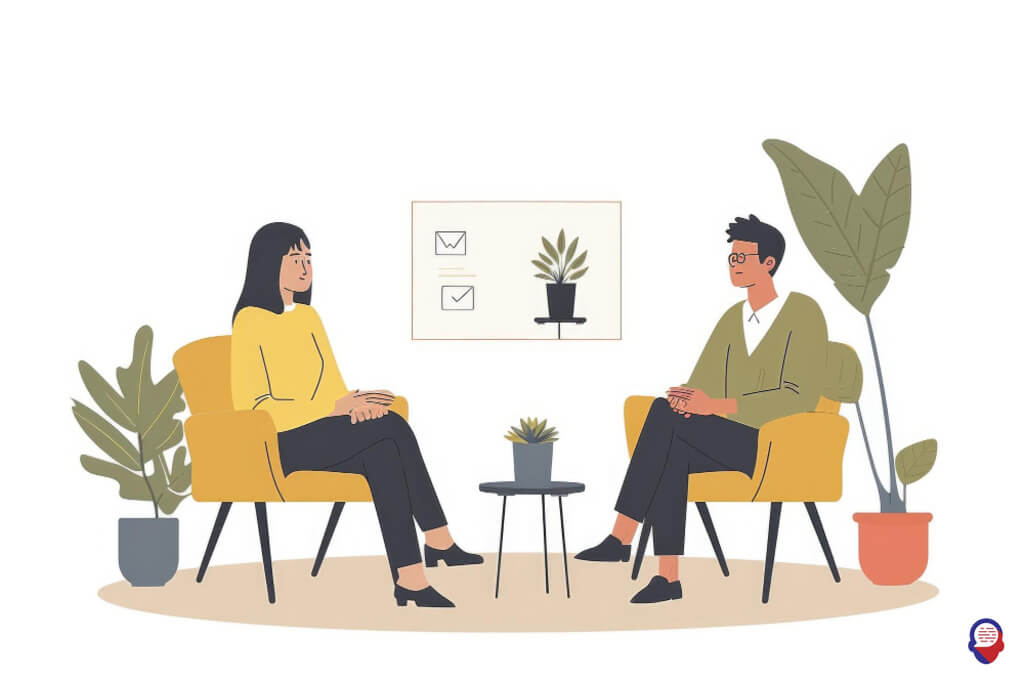
Therapy provides a safe, structured, and non-judgmental environment where you can systematically identify the root causes of your insecurity, challenge the distorted thought patterns that fuel it, and build a toolbox of healthier coping mechanisms for the future. It is a collaborative process of discovery and skill-building guided by a trained professional.
A therapist acts as both a guide and a mirror. They help you navigate the complex terrain of your inner world, reflecting back your patterns in a way that allows you to see them clearly for the first time. It is not simply talking about your problems, it is actively working to dismantle the structures that keep those problems in place and building new, more resilient ones.

What Happens in the First Few Therapy Sessions?
The initial sessions of therapy are primarily focused on building a trusting and collaborative relationship with your therapist, sharing your story in a safe space, and working together to set clear, achievable goals for your journey. This foundational phase is crucial for the success of the entire process.
Your therapist will likely ask many questions about your present concerns, your relationship history, and your family background. This is not an interrogation, but a gentle process of information gathering to understand the full context of your struggles. The most important goal is to establish what psychologists call the "therapeutic alliance," which is the bond of trust, respect, and partnership between you and your therapist.
You will have the opportunity to articulate what you hope to achieve. Instead of a vague goal like "be less insecure," your therapist will help you refine it into something concrete, such as "to be able to let my partner go out with friends without feeling anxious" or "to communicate my needs directly instead of getting upset." This is about creating a roadmap for your work together, ensuring you are both moving in the same direction.

Which Therapeutic Approaches Are Most Effective?
Several evidence-based therapeutic models are highly effective for treating relationship insecurity, with Cognitive Behavioural Therapy (CBT), Psychodynamic Therapy, and Emotionally Focused Therapy (EFT) being particularly powerful and commonly used approaches.
Cognitive Behavioural Therapy, or CBT, is a practical, goal-oriented approach that focuses on the powerful link between your thoughts, feelings, and behaviours. A CBT therapist will help you identify the specific automatic negative thoughts that trigger your feelings of insecurity, such as "He’s late, he must not care about me." You then learn to challenge these thoughts, examine the evidence for and against them, and replace them with more balanced and realistic alternatives. It is a very direct way to break the cycle of anxious thinking.
Psychodynamic Therapy delves deeper into your past to understand how it shapes your present. This approach helps you explore unconscious patterns, particularly those related to your early attachment experiences. By understanding why you developed these insecure patterns in the first place, you can begin to loosen their grip on you. It is less about immediate skill-building and more about profound self-understanding that leads to lasting change.

Emotionally Focused Therapy, or EFT, can be used with individuals or couples and hones in on the emotional experience of insecurity. It helps you understand the underlying emotional needs that are not being met, such as the need for safety, connection, and reassurance. EFT helps you de-escalate the cycle of anxiety and protest behaviour, allowing you to express your deeper, more vulnerable feelings in a way your partner can actually hear and respond to.

Will I Learn Practical Skills to Use in My Relationship?
Absolutely, a central and empowering part of therapy is learning and practicing new, tangible skills that you can use to manage anxiety, communicate more effectively, and self-soothe in real-time. Therapy is not just about insight, it is about action.
You will likely learn mindfulness techniques to help you stay grounded in the present moment when your mind starts spiralling into anxious "what-if" scenarios. This helps you observe your thoughts without getting swept away by them. You’ll also work on emotional regulation skills, learning to identify your feelings as they arise and soothe your own nervous system before you react in a way you might later regret.
A significant focus will be on communication. You will learn the difference between passive, aggressive, and assertive communication. Therapy will equip you with the tools to express your needs and fears directly and vulnerably, using "I" statements, such as "I feel anxious when I don’t hear from you," instead of accusatory "you" statements like "You never text me back." You will also practice setting and maintaining healthy boundaries, which is a cornerstone of self-respect and a key antidote to the people-pleasing tendencies that often accompany insecurity.

What Is My Role in Making Therapy Successful?
Your active participation, unflinching honesty, and a genuine willingness to do the work both inside and outside of your therapy sessions are the most crucial ingredients for a successful outcome. The therapist is a guide, but you are the one walking the path.
Therapy is not a passive experience where you are "fixed" by an expert. It is a dynamic partnership that requires your full engagement. The more you invest in the process, the more you will get out of it. This means showing up to sessions ready to explore difficult topics, being open to new perspectives, and having the courage to be vulnerable.

How Important Is Being Honest with My Therapist?
Complete and total honesty is fundamental to the therapeutic process, as a therapist can only help you navigate the territory that you reveal to them. Holding back information or minimizing your feelings out of shame or fear will only hinder your progress.
Remember, the therapy room is a unique and confidential space, free from the judgment you might fear from friends or family. Your therapist is a trained professional who has heard countless stories and is prepared for whatever you bring. Sharing the thoughts and behaviours you are most ashamed of, like checking your partner’s phone or having intense jealous thoughts, is precisely what will allow your therapist to help you most effectively. It is in bringing these hidden parts of yourself into the light that their power over you begins to fade.

Does the Work End When the Session Is Over?
No, the real, lasting transformation of therapy happens in the days and hours between your sessions, when you consciously apply the insights and skills you have learned to the challenges of your daily life. The therapy hour is the strategy session, but your life is the practice field where change truly takes root.
Your therapist may give you "homework" to complete between sessions. This isn’t like schoolwork, but rather tailored exercises to reinforce your progress. This might involve keeping a thought journal to track your insecure thought patterns, practicing a five-minute mindfulness exercise each day, or intentionally trying a new, more direct way of communicating a need to your partner.
Embracing this work is what turns insight into instinct. It’s how you build new neural pathways in your brain, making healthy responses more automatic over time. The commitment you make to yourself outside the therapy room is what solidifies the change, ensuring it becomes a permanent part of who you are, not just something you talk about for an hour a week.
Frequently Asked Questions

How long does therapy for relationship insecurity take?
The duration of therapy varies greatly from person to person, depending on the depth of the insecurity, your personal history, and the goals you set. Some individuals may experience significant relief and learn valuable coping skills within a few months of focused work, perhaps 12 to 20 sessions. For others, especially those untangling more complex trauma or deep-seated attachment patterns, the process can be a longer-term journey of self-discovery that may last a year or more. The goal is not to stay in therapy forever, but to stay as long as it is providing meaningful growth and helping you build the confidence you need to thrive.

Should my partner come to therapy with me?

This is a great question with two valid answers. Attending individual therapy is an incredibly powerful way to work on your own history, triggers, and core beliefs without any other influence in the room. It gives you the dedicated space to focus solely on your internal world. However, couples therapy is an excellent option if the insecure patterns are actively causing conflict and distress in the relationship dynamic itself. A couples counsellor can help you both understand the cycle you are stuck in and learn to communicate more effectively around the issue. Sometimes, a combination of both individual and couples work can be the most effective approach.

Is it a sign of weakness to need therapy for this?
Absolutely not, in fact, the opposite is true. Recognising a painful pattern within yourself and having the courage to seek professional help to change it is a profound sign of strength, self-awareness, and deep commitment to your own well-being. It is easy to stay stuck in familiar, painful cycles. It takes immense bravery to decide you want something better for yourself and your relationships and to take the active steps required to achieve it. Seeking therapy is an investment in yourself and a testament to your resilience.
Your relationship with yourself is the foundation upon which all other relationships are built. The constant anxiety of insecurity tells a story of a foundation that needs tending, of a part of you that needs to be heard, understood, and reassured. You’ve taken the first step by seeking to understand it. The next step is to seek support.
At Counselling-uk, we believe that everyone deserves to feel secure and cherished in their relationships. We provide a safe, confidential, and professional place to get advice and help with all of life’s challenges, big and small. Our qualified therapists are here to guide you with compassion and expertise as you untangle the roots of insecurity and build a new foundation of self-trust. You don’t have to carry this weight alone anymore. Reach out today and begin the journey back to yourself, and to the secure, loving connection you deserve.