Conquer Social Fear: A Deep Dive into CBT
Does your heart hammer against your ribs at the mere thought of a party? Do you find yourself rehearsing simple conversations, like ordering a coffee, over and over in your head? You might feel a knot of dread tighten in your stomach before a work meeting, certain that everyone will notice your trembling hands or your flushed face. This isn’t just shyness. This is the suffocating grip of social anxiety, a powerful force that can shrink your world until it feels like a prison of one. But what if you could find the key to that prison? What if there was a proven, practical method to not just manage this fear, but to systematically dismantle it? There is, and it’s called Cognitive Behavioural Therapy, or CBT. This guide is your map to understanding how this remarkable therapy can help you break free and reclaim your life from the clutches of social fear.

What Exactly Is Social Anxiety Disorder?
Social Anxiety Disorder, often called social phobia, is an intense and persistent fear of being watched, scrutinised, and judged by others in social situations. This goes far beyond the occasional nervousness most people feel; it’s a debilitating condition that can interfere with work, school, and your ability to form relationships. The fear is so overwhelming that it often leads to complete avoidance of the situations that trigger it.
At its core, the disorder is driven by a deep-seated fear of negative evaluation. You worry that you will act in a way, or show anxiety symptoms, that will be embarrassing or humiliating. You might fear being seen as awkward, stupid, boring, or unlikable. This isn’t a fleeting concern, it’s a powerful conviction that feels absolutely true in the moment, triggering a cascade of distressing physical, mental, and behavioural responses.
Physically, you might experience a racing heart, sweating, trembling, blushing, a shaky voice, or even nausea. Cognitively, your mind is flooded with automatic negative thoughts, predicting disaster and harshly criticising yourself. Behaviourally, you may either avoid social events altogether or endure them with intense distress, often relying on subtle "safety behaviours" in an attempt to cope.
Why Does Cognitive Behavioural Therapy Work So Well?
Cognitive Behavioural Therapy works so effectively because it directly targets and breaks the vicious cycle of interconnected thoughts, feelings, and behaviours that keep social anxiety alive. It operates on the principle that it’s not the situations themselves that cause your distress, but your interpretation of them.
Imagine a simple triangle. At one point, you have your thoughts ("Everyone thinks I’m an idiot"). This thought triggers the second point, your feelings (anxiety, shame, panic). These feelings then drive the third point, your behaviours (leaving the party early, avoiding eye contact). This behaviour then reinforces your original thought ("I left because I was being awkward, proving I’m an idiot"). CBT gives you the tools to intervene at each point of this triangle.
This cycle is a self-perpetuating trap, a feedback loop that grows stronger each time you go through it. Your anxious predictions lead you to behave in ways that prevent you from ever discovering if your fears are true. CBT doesn’t just talk about the problem, it equips you with practical, hands-on skills to actively challenge the thoughts and change the behaviours that maintain the fear, giving you a tangible sense of control.

What Are the Core Components of CBT for Social Anxiety?
The primary components of a successful CBT program for social anxiety are cognitive restructuring, which helps you challenge and change your negative thought patterns, and behavioural experiments, which allow you to courageously face feared situations to test your beliefs. These two pillars are supported by psychoeducation, the development of an exposure hierarchy, and the crucial work of identifying and eliminating safety behaviours.

How Does Psychoeducation Help?
Psychoeducation helps by arming you with knowledge, giving you a clear and accurate understanding of what social anxiety is, why it happens, and how the mechanisms of CBT work to resolve it. This process demystifies your experience, reduces feelings of shame, and instils a vital sense of hope.
For many, social anxiety feels like a personal failing, a character flaw that is uniquely theirs. Learning that it is a recognised and treatable condition with a predictable pattern can be incredibly validating. Understanding the CBT model, the thought-feeling-behaviour cycle, shows you that there is a logical structure to your anxiety, and therefore, a logical way out. This foundational knowledge empowers you, transforming you from a passive sufferer into an active collaborator in your own recovery.

What Is Cognitive Restructuring?
Cognitive restructuring is the methodical process of identifying, questioning, and ultimately altering the unhelpful, distorted thought patterns that act as the fuel for your social anxiety. It’s about becoming a detective of your own mind, learning to spot the automatic negative thoughts that pop up and trigger your fear.
These thoughts often feel like facts, but in reality, they are just well-practiced mental habits. In social anxiety, they frequently fall into predictable patterns called cognitive distortions. You might engage in "mind-reading," assuming you know what others are thinking ("He thinks I’m so boring"). Or perhaps "fortune-telling," where you predict a negative outcome ("I’m going to make a fool of myself at this presentation").

The goal of cognitive restructuring isn’t to force yourself into "positive thinking," which can feel fake and dismissive. Instead, the aim is to cultivate balanced, realistic thinking. It’s about learning to see the situation more clearly, without the distorting filter of anxiety, and developing a more compassionate and flexible inner voice.

How Do You Challenge Anxious Thoughts?
You challenge anxious thoughts by treating them as theories or hypotheses to be investigated, not as undeniable truths. The process involves stepping back from the thought, examining the actual evidence for and against it, and considering alternative, more helpful perspectives.
A key technique for this is Socratic questioning, where your therapist helps you probe the validity of your thoughts. You might ask yourself questions like, "What is the actual evidence that everyone is looking at me?" or "What is a more realistic outcome than the catastrophe I’m imagining?" or "If a friend had this thought, what would I tell them?".
Many people find it helpful to use a "thought record." This is a structured worksheet where you write down a triggering situation, the automatic thoughts that arose, the emotions you felt, the cognitive distortions you can identify, and then work through a rational response and a new, more balanced thought. This practice, done consistently, retrains your brain to default to a more measured and less fearful way of thinking.

What Are Behavioural Experiments?
Behavioural experiments are carefully planned, real-life activities that you undertake specifically to test your anxious predictions and beliefs. They are the active, "doing" part of CBT, moving the work from the therapy room out into the real world where anxiety lives.
This is fundamentally different from just "facing your fears." A behavioural experiment is a scientific process. You first identify a specific fearful prediction, for example, "If I ask a question in the meeting, my voice will shake and everyone will think I’m incompetent." Then, you design an experiment to test that belief, which would be to ask a question in the next meeting.
The crucial part is what you pay attention to during and after the experiment. You are not just enduring the situation, you are actively gathering data. Did your voice shake as much as you thought? If it did, did anyone actually react negatively? Did they even seem to notice? More often than not, you discover that the feared catastrophe doesn’t happen, or if a small part of it does, the consequences are far less severe than you predicted. This new, direct experience is far more powerful than any amount of simple reassurance.

How Is an Exposure Hierarchy Created?
An exposure hierarchy is created by working collaboratively with your therapist to list all the social situations you fear and avoid, and then ranking them in order from the least anxiety-provoking to the most terrifying. This list becomes your personalised roadmap for recovery.
To rank the items, you typically use a scale called the Subjective Units of Distress Scale, or SUDS, rating each situation from 0 (no anxiety) to 100 (extreme panic). A situation like making a phone call to a friend might be a 20 on your scale, while attending a large party where you know no one might be a 95.
You don’t start by tackling the 95. That would be like trying to learn to swim by jumping into the deep end of the ocean during a storm. Instead, you begin with the lower-ranked items, the situations that feel challenging but manageable. By successfully completing these smaller steps, you build essential skills, gather evidence against your anxiety, and gain the confidence needed to gradually climb the ladder toward your most feared situations.

What Role Do Safety Behaviours Play?
Safety behaviours are the subtle, often unconscious things you do in social situations to try to prevent your feared outcome from happening or to reduce your anxiety in the moment. Paradoxically, these behaviours are one of the most powerful factors that keep social anxiety going, because they prevent you from ever learning that you can cope without them.
Think of them as anxiety’s little tricks. They can include things like mentally rehearsing sentences before you speak, gripping your drink tightly to hide shaking hands, avoiding eye contact, asking a lot of questions to deflect attention from yourself, or sticking close to a "safe" person at a social gathering. They might even involve wearing a scarf to hide blushing or talking very quietly to hide a trembling voice.

These actions give you a false sense of security. You might leave a party thinking, "That went okay because I didn’t say much and no one noticed me." The safety behaviour gets the credit, not you. This reinforces the underlying belief: "I am not safe on my own, I need these crutches to survive." A critical part of CBT is to identify these behaviours and then systematically drop them during your behavioural experiments, so you can finally learn the truth, that you are more capable and resilient than your anxiety has led you to believe.

What Does a Typical CBT Session Look Like?
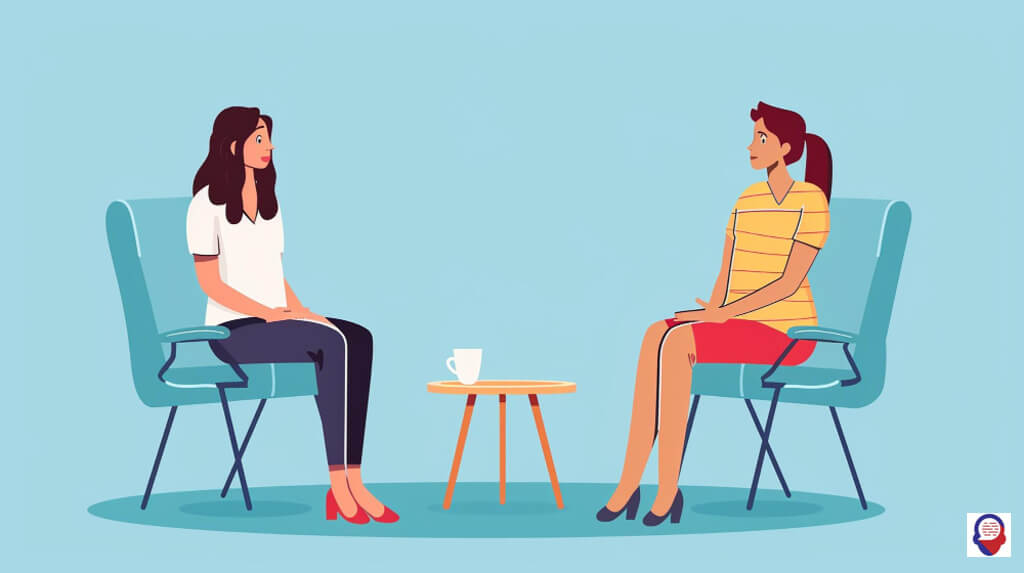
A typical CBT session is a structured, collaborative, and goal-oriented meeting, quite different from the free-flowing style of other talk therapies. Each session involves reviewing your progress from the past week, collaboratively setting an agenda for the current session, working on specific cognitive or behavioural skills, and then agreeing on a new "homework" assignment to practice before the next meeting.
The session usually begins with a brief check-in on your mood and a review of the practice tasks you completed since your last appointment. This isn’t about getting a grade, it’s about learning from your experiences, both the successes and the challenges. Together, you and your therapist will decide what to focus on for the remainder of the session, ensuring the time is used effectively to address your most pressing concerns.
The bulk of the session is dedicated to learning and practicing new skills. You might analyse a thought record, role-play an upcoming social situation, or plan a new behavioural experiment in detail. The therapist acts as a guide and a coach, providing expertise and support, but you are an active participant, a scientist exploring your own mind. The session concludes by summarising the key takeaways and establishing a clear, manageable plan for what you will work on in the real world.

How Can You Prepare for CBT?
You can best prepare for CBT by adopting a mindset of curiosity and being willing to become an active, engaged partner in your own therapy. The most significant progress in CBT often happens between sessions, so readiness to practice the skills you learn is paramount to your success.
Before you even begin, it can be helpful to start noticing your anxiety. You could keep a simple, informal journal for a week or two, noting which situations make you anxious and what specific thoughts and feelings come up. This isn’t for analysis, just for observation. It gives you and your therapist a valuable starting point.
It’s also vital to find a qualified therapist with whom you feel a good rapport. Therapy is a relationship, and feeling safe and understood is essential. Finally, set realistic expectations. CBT is not a magic wand. It is a skill-building process that requires effort and has its ups and downs. Preparing for the journey with patience and self-compassion will make all the difference.
Frequently Asked Questions

How long does CBT for social anxiety usually take?
The duration of CBT for social anxiety can vary, but a typical course of treatment often ranges from 12 to 20 weekly sessions. The exact length depends on factors like the severity of your symptoms, how long you’ve been struggling, and how consistently you’re able to practice the skills between sessions. Some individuals may experience significant relief more quickly, while others may benefit from a longer period of support.

Can I do CBT for social anxiety on my own?
Yes, you can certainly begin learning and applying CBT principles on your own using self-help books, online resources, and apps. This can be a great first step and is effective for some people with milder symptoms. However, working with a qualified therapist is generally recommended as they can provide a proper diagnosis, tailor the program specifically to you, provide accountability, and guide you through the more challenging aspects of therapy, like behavioural experiments.

What if CBT doesn’t seem to be working for me?
If you feel that CBT isn’t working, it is incredibly important to communicate this openly with your therapist. Therapy is not a one-size-fits-all process. Your therapist can help you troubleshoot the problem, perhaps by adjusting the techniques, changing the pace, or exploring if there are other underlying issues at play. Sometimes, a different therapeutic approach or a combination of therapies may be more suitable for your unique needs.

Is medication needed with CBT?
Medication is not always necessary, as CBT is a highly effective standalone treatment for social anxiety disorder. However, for individuals with very severe symptoms, a combination of CBT and medication, typically an antidepressant like an SSRI, can be the most effective strategy. Medication can help reduce the intensity of the physical anxiety, making it easier to engage in the behavioural work of CBT. This is a personal decision best made in consultation with a psychiatrist or your GP.

***
The journey out of social anxiety is not about becoming a different person. It’s not about transforming into a fearless extrovert overnight. It is about removing the barriers that have been holding you back, allowing your authentic self to emerge from behind the wall of fear. It is about having the freedom to choose, to say yes to opportunities, to build connections, and to navigate your life based on your values, not your anxieties.

At Counselling-uk, we understand that taking the first step is often the hardest part of any journey. We are here to provide a safe, confidential, and professional place to get advice and help with mental health issues, offering support for all of life’s challenges. If you are ready to stop letting social anxiety dictate the terms of your life, we are ready to help you find your voice. Reach out today to begin building a more confident and connected future.